
Amsterdam has a way of being effortlessly cool without seeming to try. Yes, there are the postcard-perfect canals and impossibly pretty narrow houses, but there’s also cutting-edge design, incredible art, buzzing neighbourhoods and a food and nightlife scene worth staying up for.
Here’s where to start…
Two wheels are the way to go. In Amsterdam, cycling isn’t just a cute way for tourists to see the city—it’s part of everyday life. More than 800,000 bikes criss-cross the city, 63% of residents cycle daily, and some 400 kilometres of bike paths make getting around on two wheels surprisingly easy.
The city takes its bikes so seriously that it has even built massive bicycle parking garages beneath the water around Central Station, with room for roughly 11,000 bikes. Rent one and join in—but pay attention. Amsterdam’s cyclists know exactly where they’re going, and the morning and evening bike rush hours are very real.

Faze Founder, Lorraine, finds her perfect fit!

Those crooked houses aren’t an optical illusion. As you wander along Amsterdam’s canals, you’ll notice that some of its impossibly narrow houses tilt and lean at slightly precarious-looking angles—so much so that they’ve earned the nickname “dancing houses.”
Much of Amsterdam was built on soft peat and clay, so its historic buildings were supported on long wooden piles driven deep into the ground. Over centuries, shifting soil and ageing foundations have left some buildings settling more evenly than others, creating the wonderfully wonky skyline that has become part of the city’s charm.
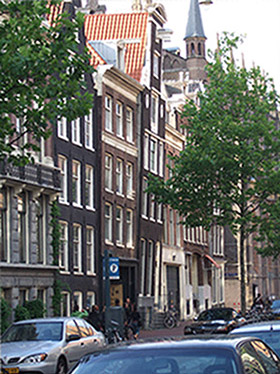
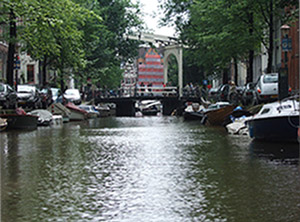
This is a city built around water. Amsterdam’s canals aren’t simply pretty backdrops for photos—they’ve shaped the city for centuries. Its famous 17th-century canal ring was an engineering feat in its day, created by draining swampland and constructing an intricate network of waterways that helped turn Amsterdam into one of the world’s great trading cities.
Today, more than 1,200 bridges cross Amsterdam’s waterways, while an estimated 2,300 to 2,900 houseboats make the canals home. And the historic canal ring itself is now a UNESCO World Heritage Site. Take a canal cruise at least once—seeing those tall, narrow houses, tiny bridges and neighbourhoods from water level gives you a completely different perspective on the city.
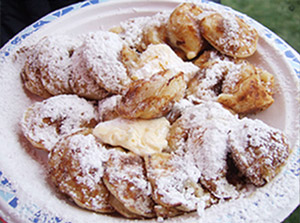
Consider poffertjes your Amsterdam snack break. These tiny, fluffy Dutch pancakes (pronounced roughly “PO-fer-jus”) are traditionally served piping hot with melting butter and a generous dusting of powdered sugar. You’ll find them at pancake houses, restaurants and street-market stalls around the city—but there’s something particularly good about eating them fresh from a vendor while you’re wandering Amsterdam. Order a portion to share if you like. Just don’t count on actually sharing.
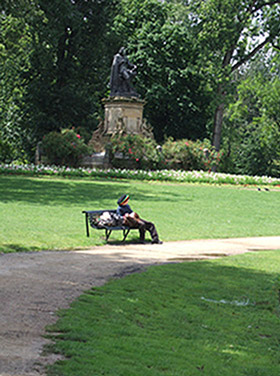
Do Amsterdam like a local and slow down for an hour. Vondelpark has been the city’s favourite green escape since it opened in 1865, and today it sees around 10 million visits a year. On a sunny day, expect lawns filled with picnics, cyclists cruising the paths and friends lingering over coffee at one of the park cafés.
There’s plenty to discover if you keep walking: a rose garden with more than 70 varieties, an open-air theatre and even an eight-metre-high Picasso sculpture gifted to the city in 1965. Grab something for lunch, find a patch of grass and give yourself permission to have absolutely nowhere else to be.
A little Dutch music history. For four decades, summer meant Parkpop in The Hague, the huge free music festival that became one of the best-known events of its kind in Europe. Launched in 1981 with around 35,000 festivalgoers, it grew into a massive annual celebration of live music and, for years, was billed as the largest free pop festival in Europe.
Parkpop celebrated its 40th and final edition in 2022 before rising costs brought the long-running tradition to an end. So while you can no longer add it to your itinerary, it’s a reminder that there’s plenty worth exploring beyond Amsterdam—and that the Dutch have been doing big outdoor festival culture for a very long time.

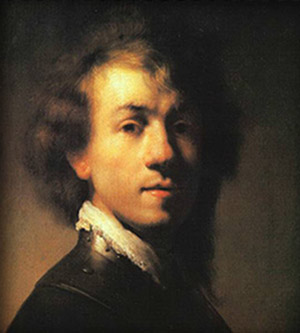
Meet Rembrandt at home. One of the most celebrated artists of the 17th century, Rembrandt van Rijn moved to Amsterdam as an ambitious 25-year-old and went on to create some of his greatest work here. In 1639, he bought a grand house on Jodenbreestraat, where he lived, painted, taught students and entertained clients for the next 19 years.
Today, that house is the Rembrandt House Museum—and this isn’t simply a collection of paintings hung on white walls. You can walk through his studio, living quarters and the rooms where he worked, reconstructed largely from a remarkably detailed inventory of his possessions made when financial troubles forced him to sell almost everything he owned.
And to see Rembrandt on a truly epic scale, head to the Rijksmuseum for The Night Watch, his enormous 1642 masterpiece and one of the most famous paintings in Dutch history.
Some places stay with you long after you leave. In the heart of Amsterdam, the Anne Frank House preserves the Secret Annex where Anne Frank, her family and four others hid from Nazi persecution for more than two years during the Second World War.
Anne spent 761 days here, writing the diary that would eventually be translated into more than 75 languages. Walking through the hidden entrance behind the bookcase and into the rooms where eight people lived in silence and fear makes a history most of us know from books suddenly, and profoundly, real.
The museum is deliberately understated—the Annex remains largely empty, at the request of Anne’s father, Otto Frank. Give yourself time for this one. It isn’t simply another Amsterdam attraction; it’s a place for understanding and remembering.

AMSTERDAM QUICK FACTS
Population: 743,905, including the surrounding suburbs, 1.5 million
Official Language: Dutch is the national language of Amsterdam, Holland. However English is spoken by almost everyone.
Currency: Euros (1 Euro = $1.40 CAD)
Climate: It is warmest in June-August with temperatures ranging between 21 and 26 degrees Celsius.
Size: 207 square kilometers
Time Zone: UTC/GMT+1. So if it’s noon in Amsterdamn, it is 4am in Vancouver, 5am in Calgary, 7am in Toronto and 8am in Halifax.
The Amsterdam FlagAmsterdam literally means “dam on the Amstel.” The city began as a small settlement along the Amstel River in the early 13th century, with a dam built across the river sometime between 1264 and 1275. That little waterside community eventually became one of the most influential cities in the world.
The 17th century changed everything. Amsterdam became an international centre of trade, finance, science and art, with ships connecting the city to ports across Europe, Asia, Africa and the Americas. It was a period of extraordinary wealth and creativity—the Amsterdam of Rembrandt and those grand canal houses—but that prosperity also had a darker side. Dutch colonial expansion was intertwined with exploitation and slavery, a history the city and its museums are increasingly bringing into the story.
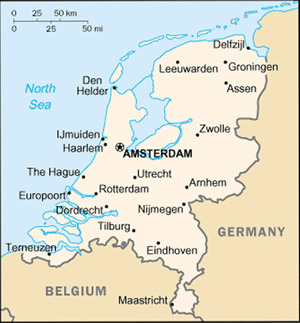
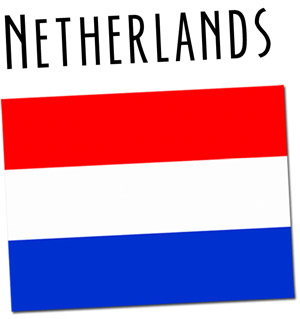
Amsterdam is the capital; Holland isn’t the country. The country is the Netherlands. North Holland and South Holland are just two of its 12 provinces—although Amsterdam itself is located in North Holland.
Yes, the Dutch really are tall. Recent data from Statistics Netherlands put the average height of Dutch-born 19-year-old men at about 183 cm (6’0″) and women at 169 cm (5’7″). But contrary to the old idea that the Dutch just keep getting taller, height actually peaked among generations born around 1980 and has declined slightly since.
New York was once New Amsterdam. The Dutch established New Amsterdam on Manhattan in the 17th century before the English took control and renamed it New York. The 1667 Treaty of Breda helped formalize the new colonial order, with the Dutch retaining Suriname while the English retained New Netherland.
Those windmills were doing serious work. Dutch windmills weren’t built simply to create one of Europe’s prettiest landscapes. Beginning in the 15th century, specialized polder mills pumped water out of low-lying areas, helping the Dutch reclaim and keep land dry. More than 1,200 historic windmills still survive across the Netherlands today.
Amsterdam has some serious sparkle in its history. The city has been an important centre of the diamond trade for centuries, and in 1908 Amsterdam’s Asscher family took on one of the most intimidating jobs in jewellery history: cutting the 3,106-carat Cullinan, the largest gem-quality rough diamond ever discovered. Pieces cut from it now form part of the British Crown Jewels.

FOR MORE INFORMATION VISIT:
Visit the official Holland.com tourism site for Amsterdam
www.eurail.com (Eurail is a great way to get around Europe)
Comments are closed.